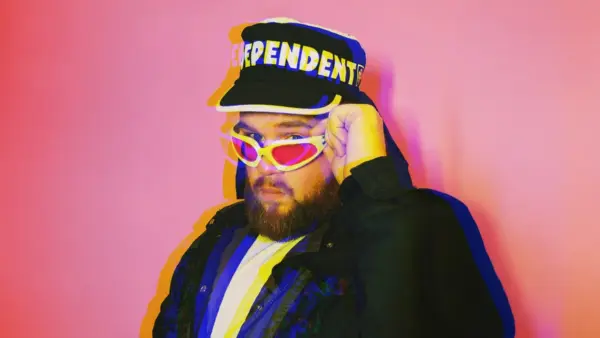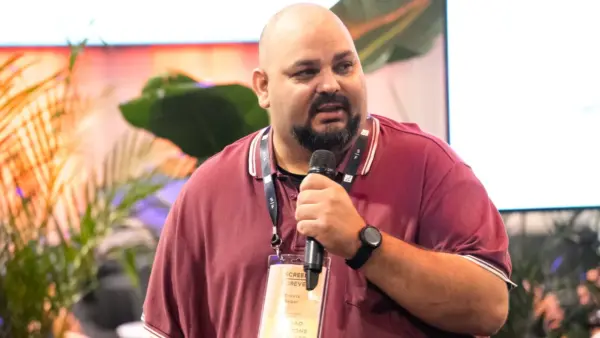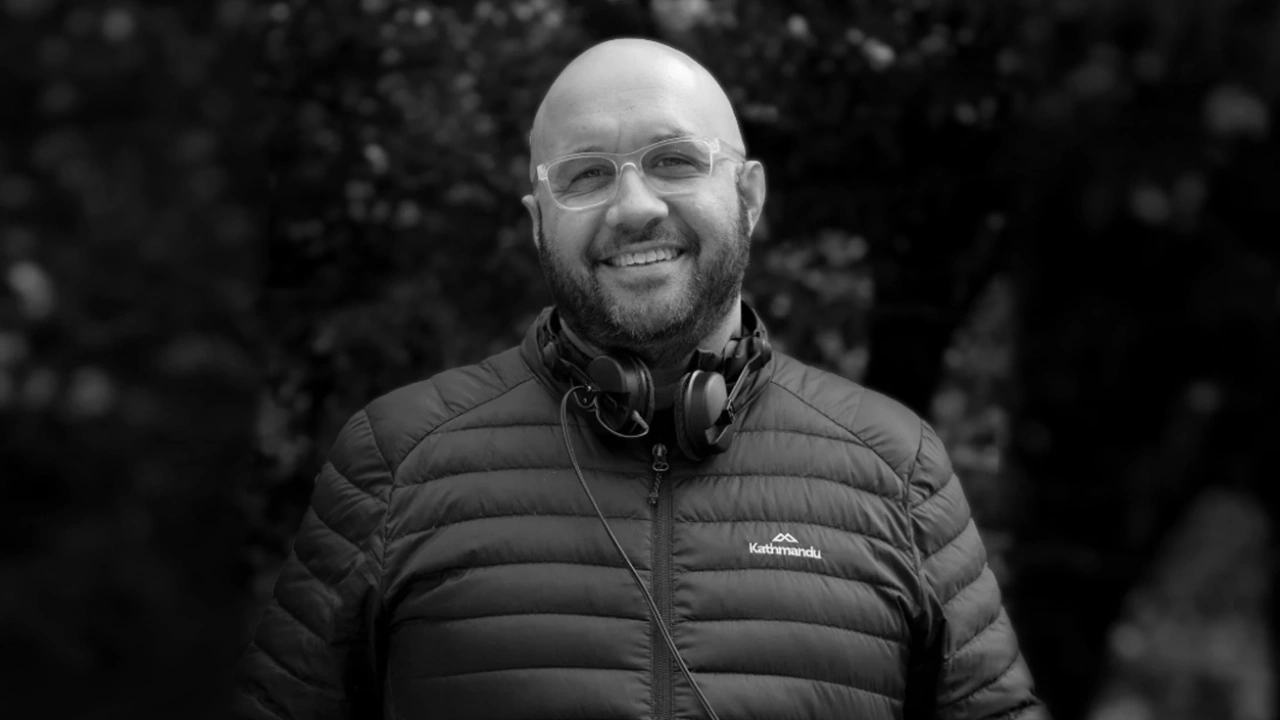
Daniel King, a Monero, Walbunja and Worimi documentary filmmaker, is founder and director of First Person Films and has over 20 years’ experience in film and television, working across broadcast, festivals, international distribution, and content for community organisations.
In 2025, the award-winning filmmaker was named the recipient of Screen NSW’s First Nations Screen Fellowship. The Fellowship provides mid-career and established First Nations screen creatives in NSW with strategic professional development and funding, to support a project in early-stage development and help build connections in the local and international screen sector.
Daniel’s recent credits include writing and directing 2023 documentary Her Name is Nanny Nellie and co-directing 2024 Southern Pictures documentary Skin In The Game. Daniel was the inaugural recipient of the Indigenous Documentary mid-career placement with Australian International Documentary Conference (AIDC), Australian Broadcasting Corporation (ABC) and Northern Pictures in 2021, and he was also one of the winners of the inaugural Indigenous Creators Pitch at the 2025 AIDC Awards.
Screen NSW recently spoke to Daniel about his ethos and approach to filmmaking, how his production company is creating opportunities and giving First Nations people a voice through storytelling, and to provide an update on the project he is developing as part of his Fellowship before he travels to the Toronto International Film Festival in September.
Your ethos is grounded in respect, collaboration, and purpose-driven storytelling using film to educate, encourage dialogue, reflection and inspire change. Why is this important to you in your creative practice?
The reason I got into filmmaking was to give my people a voice and an opportunity to tell our stories, our way.
When I first started making films in the early 2000s, there weren’t many documentaries being made by Aboriginal people.
I’ve always felt that it’s my responsibility to use my skills to help better the lives of my people. The skill I have is filmmaking, so I feel a strong responsibility to make films that can have a positive impact for First Nations communities. Whether that’s through broadcasting documentaries or creating content directly for communities, I see both as equally important.
I feel like my role within the community is to be a storyteller.
In 2023, you founded the production company First Person Films. Can you tell us a bit about what motivated you to create the company?
Up until then, I’d been working as a freelancer, and we decided it was the right time to formalise our working relationship and establish a company.
The motivation was to create a strong identity and platform for the kinds of stories we want to tell, while also building financial stability for myself and the people we work with. More importantly, it ties back to the reason I got into filmmaking in the first place. First Person Films is about creating opportunities for Aboriginal people to have a voice and tell stories from our own perspectives.
You work across factual storytelling and client work. Is there one project that has had a significant impact on you? Can you tell us about it and why?
The project that’s probably had the biggest impact on me is our film Her Name is Nanny Nellie. It tells the story of my great-great-grandmother and an ethnographical statue that was made of her by the Australian Museum in 1925. The film is really about truth-telling — giving that statue a name, context, dignity and respect, and acknowledging who she was as a person.
It was a story led by my mum, so it’s a very personal family story that we shared with audiences. It was an amazing experience working with her on the project, especially knowing she had spent more than 20 years researching our family history. To be able to help bring that story to life and place that part of our history into the public record was incredibly meaningful.
Since then, the film has been screened internationally through a broadcast deal with Al Jazeera and is now being used as part of the New South Wales school curriculum to help teach truth-telling.
First Person Films actively engages with First Nations community members throughout the production process to ensure diverse perspectives, stories and talent are platformed in the storytelling process. Why is this important, and what advice would you have for other filmmakers looking to ensure they are engaging in authentic storytelling?
I think it’s incredibly important that we engage First Nations community members throughout the production process because it’s one of the ways I can give back to the First Nations film and television community.
First Person Films has always been about giving First Nations people a voice, and that voice can come in many different forms. It might be through camera operating, music composition, producing, writing, or on-screen talent.
If we can provide opportunities and a platform for people through our company, then that can only benefit our community as a whole. Historically, there has been a lack of First Nations practitioners in the screen industry. That is slowly changing, but there still needs to be more opportunities for First Nations film and TV practitioners to develop their skills and become industry leaders.
For non-Indigenous production companies, my advice would be to genuinely engage with communities and employ First Nations practitioners wherever possible. Authentic storytelling comes from involving people in the process.
Congratulations on being named Screen NSW’s 2025 First Nations Screen Fellowship recipient. Through the Fellowship you have received funding for early project development, can you tell us a bit about the project you are developing?
Yes, I’ve received early development funding for a number of projects in the past, and the project I’m currently working on also received initial development funding through the Create Indigenous Creators Program at AIDC.
The project is titled Abolished, and it looks at the seven representative bodies that have represented First Nations communities to government since the 1967 Australian referendum, and how their abolishment reflects the government’s relationship with its First Nations people.
In the wake of the 2023 Australian referendum, it feels like an important time to look at First Nations politics and how this inconsistent approach has had a ripple effect throughout our communities.
The Fellowship is supporting you to attend the Toronto International Film Festival in September – what are you most looking forward to about this trip?
This will be our first time attending the Toronto International Film Festival, so I’m really looking forward to experiencing the festival as a whole. Most specifically, I’m excited about the opportunity to attend the workshops and forums.
It will also be an amazing opportunity for networking, especially with other First Nations filmmakers, and a great chance to promote not only our project ideas, but more importantly our company and the kinds of projects we want to make into the future.
Through the Fellowship you have also been assigned an industry mentor, Ivan O’Mahoney, for the duration of the program. Why do you think mentorship is so important in the screen industry?
Ivan, as you may know, is a very experienced documentary filmmaker. He’s a real creative force and has a wealth of experience in the craft of documentary storytelling.
At this stage of my career, I still think it’s incredibly important to keep learning and to be mentored by some of the industry’s top filmmakers. Established and mid-career development is just as important as when you’re starting out. You can never stop learning.
What kind of stories are you drawn to or are you looking to work on next?
We have a number of projects we’re currently working on, including several projects in development as well as community-based client work. The stories we’re most drawn to are ones that help normalise First Nations history and culture within this country.
We want to help Australia better understand its history, so it’s recognised and accepted as truth, while also embracing our cultures, communities, and the beauty and diversity we bring to this country. Our connection to Country, our understanding of it and culture are things that all Australians can be proud of, whether you’re Black or white.